

SEARCH RESULTS History Search Criteria: 105 Hits 49 - 60
GoogleMap Loading...
-
 49
49Yamada Church
In the Edo Era (1600-1868), the Ikitsuki Christians hid in secluded spots on the island. In 1878, Fr. Pélu arrived and took charge of missionary activities in the areas around Hirado and Ikitsuki. The hidden Christians were baptized and rejoined the Roman Catholic Church. Tetsukawa Yosuke designed and constructed the church in 1912. -
50
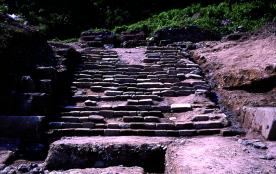
Remains of Hinoe Castle
During the 14th century the family ruling the Shimabara Peninsula constructed a castle named ‘Hinoe-jo’. Harunobu, the 14th lord (1597 – 1612) was a Christian daimyo and refurbished his castle into a large-scale structure with gardens, a tea arbor and many rooms. Stone walls remain around the site of the front gate. A recent survey has revealed that the construction materials including the stone steps were acquired from tombstones in Buddhist graveyards which Harunobu had demolished. This indicated the religious situation in those days, when Christianity was flourishing. In 1982, the location of the castle was designated a National Historical Site. -
51
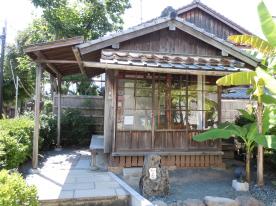
Nyoko-do and Dr. Takashi Nagai Memorial Museum
Nyoko-do (“‘As Thyself’ Hall”) is the small house of Dr. Takashi Nagai, built on the site of a former residence of a ‘chokata’, a leader of hidden Christians. Dr.Nagai, whose wife was a descendant of the chokata, spent his last days here, suffering from leukemia. On his sick bed, he authored numerous books, essays and drawings about Urakami and the lives of his family, hoping to appeal for neighborly love and peace. ‘Nagasaki no Kane’ (‘The Bells of Nagasaki’), about the bomb-damaged bell of Urakami Cathedral, is one of his best-known works. He also left an important report on relief activities for the victims of the atomic bombing, from his point of view as a radiologist. Inside this tiny house of barely two square meters, there is a statue of the Virgin Mary sent from Argentina as a prayer for peace. -
52
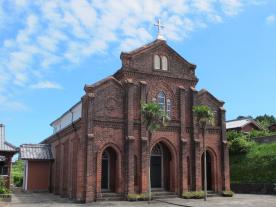
Kusuhara Church
Kusuhara was one of the remote areas settled by Sotome Christians around thelate-18th and early-19th centuries. Their descendants underwent ordeals even after the rediscovery of the Christians in Nagasaki. A roundup at Mizunohara expanded into the mountains. The hidden Christians were imprisoned and tortured and their settlements plundered. The site where they were jailed, near to the church, is open to the public. Around 1910, the present church was designed and constructed under the direction of Tetsukawa Yosuke. The building was repaired and improved in 1968. -
53
Senkoji
Escape from the hustle and bustle of everyday life, and try Zen Buddhism meditation at Senkoji 千光寺, a Buddhist temple in Hirado. Here, you can have the opportunity to be a part of a true Zen experience, all for the price of 500 yen. Zen Buddhism has a long history. It originated in China during the Tang Dynasty (618-907) and it was brought to Japan during the Song Dynasty (960-1279) by Myoan Ensai, who was the first Japanese Zen Buddhist monk. After your meditation, you’ll be invited for some tea and refreshments. As well as bringing Zen Buddhism, Ensai also brought and cultivated the first green tea leaves in Japan. This tea is specially grown in the gardens of Senkoji, Fushun-en, by the monks, and is a truly delicious way to end your experience. -
54
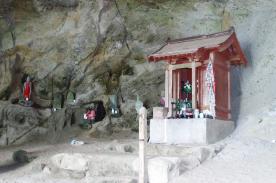
Anakannon Cave
Anakannon is a cave inside Mount Iwado. This is the place where it is told that in 1582 the Christian priests, who held the higher ranks such as Gaspar Coelho and Luis Fróis, assaulted the Buddhists hidden inside. They burned and destroyed the Buddhist statues that were too big to be transported elsewhere. The remaining Buddhist statues were taken to the monastery in Kuchinotsu and set on fire. -
55

Location of the Arrival of the Nanban Ships
In 1567, after the arrival of three Portuguese ships led by Captain Tristão Vaz Da Veiga, Kuchinotsu Port started to trade with the West and began to flourish. In 1579, Father Valignano arrived on the ship of Captain Leonel De Brito. This led Kuchinotsu to not only become the center from whence Christianity spread, but to also become famous worldwide as the gate between Western and Eastern cultures. The excellence of Kuchinotsu Port was documented at that time, a report declars “there is no other comfortable and safe port, protected by the wind in all four directions. Kuchinotsu Port is better than Omura (Fukuda) Port, because there it’s possible to anchor freely and stay the night.” -
56

Go no Kura Shimabara Ikki Mura Furuse ‒ Somen Noodles Factory
Outside this beautiful white building a bold somen signboard stands out. This factory reflects the passion of its owner for antiques and the nostalgic, with a waterwheel along the road in front of the shop. A relaxing atmosphere welcomes customers. -
57
Yon no Kura Yamakome – Soy Sauce and Miso Brewing Factory
For those fond of old traditional Japanese style houses, this one can’t be missed. The central pillar of the structure of this brewery is made of the trunk of a cherry tree. In the courtyard, there grows a magnificent plum tree. The house itself is provided with every luxury. The fence surrounding the property is similar to one of a castle, which adds to the house’s charm. -
58
San no Kura Kiyoya - Soy Sauce and Miso Brewing Factory
This is a miso and soy sauce brewery, however it also offers a soft ice cream with a special taste. The signboard of this miso brewery was designed based on the beautifully written characters of the chairperson who started the business. -
59
Ni no Kura ― Urakawa Brewery
The small river that flows in front of this sake brewery comes straight from Ayugaeri Waterfall. The brewery has preserved its original structure after having been passed through three generations (Meiji, Taisho, Showa). -
60
Memorial Park of Houses Destroyed by Debris Flow
This park is located inside Japan’s biggest roadside station Mizunashi Honjin Fukae and exhibits 11 houses buried by the debris flow, which occurred during the volcanic eruption of Mount Unzen on September 8, 1992.