

SEARCH RESULTS History Search Criteria: 93 Hits 73 - 84
GoogleMap Loading...
-
 73
73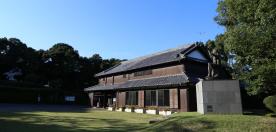
Seibo Kitamura Memorial Hall
Seibo Kitamura is the sculptor of the Peace Monument located in Nagasaki City’s Peace Park. His birthplace displays about 60 pieces of his carvings and calligraphy. In the hall’s garden it is possible to see a replica of the Peace Monument at one-fourth of its original size. -
74
Arima Christian Heritage Museum
The ruins of Hinoe and Hara Castles, located in Minamishimabara, are part of the ‘Churches and Christian Sites in Nagasaki’, included on UNESCO’s tentative list of World Heritage sites. Minamishimabara has established the Arima Christian Heritage Museum with the purpose of promoting the inscription of the collection of sites on the World Heritage List. Both of these historical places give testimony to both the light and dark sides of Nagasaki Prefecture’s Christian history. They represent a valuable memory transmitted through generations. Their tale, handed down only in this very limited area, is just a tiny piece of the vast puzzle of world history, but the flowering of Christian culture and the subsequent religious persecution causing followers to go into hiding, until the faith’s eventual revival, constitute a theme that runs through human history. The Arima Christian Heritage Museum exhibits 250 years of Christian history showing its propagation, prosperity and suppression, ending in the Shimabara-Amakusa revolt. -
75
Kuchinotsu Museum of History and Folklore & Marine Museum
The Kuchinotsu Museum of History and Folklore is the only remaining Western-style building in Kuchinotsu from the Meiji Era. It displays various materials representing the prosperity of the once world-famous port of Kuchinotsu after the arrival of Western ships. -
76
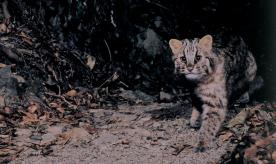
Tsushima Wildlife Conservation Centre
Remote and beautiful Tsushima, located closer to Korea than it is to Japan, boasts a truly special natural environment. Almost 90% of the island’s surface is covered in forests, and the world’s northernmost coral reef was discovered off its coast in 2012. Its unique ecological system also means that Tsushima is home to wild animals which can’t be found anywhere else in the world. Perhaps the most famous of these is the Tsushima leopard cat, thought to have arrived from the Asian continent over 100,000 years ago. These days, the population of the Tsushima leopard cat is sadly declining due to road kills and changes to its natural habitat. In 1994, the Japanese government designated it as a National Endangered species. The Tsushima Wildlife Conservation Center works to protect not only the Tsushima leopard cat, but all of Tsushima’s rare wildlife. As well as carrying out ecological research and public awareness work to protect the island’s natural environment, the center also holds events, and offers the opportunity to meet a real leopard cat! -
77
Goto Camellia Oil Extraction Experience
Known as the beauty secret of youthful Geisha, Camellia or Tsubaki oil is one of the Goto Islands’ most precious exports. The highly valuable oil has long been recognized in East Asia for its highly restorative and rejuvenating effect on skin, hair, and nails. While opportunities to witness the extraction process are rare, the Tsubaki Taiken Workshop in Shin-Kamigoto offers hands-on experiences throughout the year. Workshops last between sixty and ninety minutes, giving visitors a chance to crush and press the Camellia seeds for oil themselves. -
78
Nagasaki Embroidery
Named as one of Japan’s top three regional festivals, Nagasaki’s autumn Kunchi festival is a vibrant, energetic celebration dedicated to the local deity of Suwa Shrine. The floats and costumes paraded around the city use bright colours and intricate threadwork incorporate depth and stunning realism into each piece. Dragons and a vast variety of sea life seemingly jump from the fabric and come alive on stage. After admiring the detail of the floats and costumes at the festival, try your hand at recreating some for yourself. The Nagasaki Museum of History and Culture offers workshops in the traditional embroidery techniques of Nagasaki. Unlike the typical embroidery style popular in other prefectures of Japan, this style was developed by recreating artworks brought to Japan from overseas. -
79
Nagasaki Glass
From church windows to gold leaf encrusted works of art, glassmaking has long been a popular industry in Nagasaki. Initially learned from Portuguese merchants in 1570, local craftsmen combined techniques from China, Czechoslovakia and Holland. The result is a unique fusion of styles referred to as ‘Nagasaki Glass’. Although no longer mass produced, workshops such as Rurian Glass Studios hold a variety of workshops that allow you to experience Nagasaki glassmaking for yourself. Make your own blown-glass cup or vase, kaleidoscope, stained glass keychain, or glass pendant. Creations are usually available for pickup the following day, but can also be mailed. -
80
Mikawachi Porcelain
Mikawachi has produced some of Japan’s highest-quality porcelain since the 16th century. Also called ‘Hirado Ware,’ it is characterized by its use of vibrant cobalt paint on pure white porcelain. Since the style’s establishment in 1598, local ceramics artists have strived to produce everything from everyday items to high-end ornamental pieces worthy of the Imperial Court. Their highly skilled craftsmanship, including techniques such as sukashibori (openwork), haritsuke (pasting), okiage (painting white porcelain to create 3D artwork) and hakutai (white porcelain) has ensured the style remains popular today. You too can experience this exquisite craft for yourself. Practice your brush strokes to recreate one of Mikawachi’s iconic designs on a plate, mug or Japanese teacup, or create your own original design. -
81
Hasami Ceramics
Dating back more than 400 years, Hasami ceramics were brought to Japan by Korean potter Lee Yukei. Lee introduced multi-chambered kiln technology to the area in 1599, shortly before a nationwide interest in pottery took off during the Edo period. Visit the various kilns that dot the area whilst hunting for a bargain at the Hasami ceramics markets. The Museum of Ceramic Art contains informative displays on the history and traditions of Hasami pottery, and is a great place to learn about local styles (including Kurawanka bowls and compra bottles) and particular skills employed by local artisans. There is even a pottery painting robot! Admission and parking at the museum is free. Try your hand at making your own piece of Hasami pottery at Mount Nakao’s Denshukan with a handmade ceramics or crockery painting class. Expert potters help visitors mold their clay to create their very own tableware. Painting workshops are also available for those short on time. Come to Hasami during late April or early May to take advantage of the annual pottery festival. The festival features booths from over 100 porcelain producers and dealers with an attractive 30-40% price reduction. Soak up the festival atmosphere, grab some delicious street food, hunt out some great bargains and take something special home with you. -
82
The Nagasaki Museum of History and Culture
The Nagasaki Museum of History and Culture is one of Japan’s leading museums covering the story of international exchange. It has many exhibitions of precious historical materials from Nagasaki’s modern history, works of art and ancient writings. It also shows a part of the restored Tateyama branch of the Edo-period Nagasaki magistrate’s office where visitors can enjoy a short drama performance. The craft center offers hands-on classes of Nagasaki’s traditional crafts. -
83
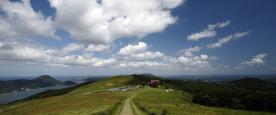
Hirado Olle trail course
Travel back in time by exploring one of Japan’s first internationally influenced towns. Hirado Olle offers a light stroll through some of Nagasaki’s most historic attractions, including Saikyoji Pagoda, St. Francis Xavier Church and the Hirado Dutch Trading Port. The view from Kawachi Mountain Pass changes with each season—azaleas in spring, silver pampas grass in autumn, and the annual burn-off in winter keep tourists coming back all year round. After completing your walk, soak your aches away at the arm and foot hot spring. Level- beginner 4-5hrs return More information in the Mountain Madness special available early 2017! -
84
Mt. Shimizu trail
Explore Tsushima’s rich history while enjoying stunning views of the port town Izuhara from the summit of Mt. Shimizu. Start your journey at the Tsushima History & Folk Customs Museum, then follow the signs for Shimizuyama Castle Ruins. During this approximately a 1 hour round trip, you’ll walk past the crumbling walls of Mt. Shimizu Castle, built by Toyotomi Hideyoshi in the 16th century, and enjoy the sweeping views of land, sea, and sky from the top. For those who want more of a challenge, the 4-5 hour ascent to Mt. Ariake can also be reached from the same starting point. Level - beginner 1-1.5hrs return More information in the Mountain Madness special available early 2017!